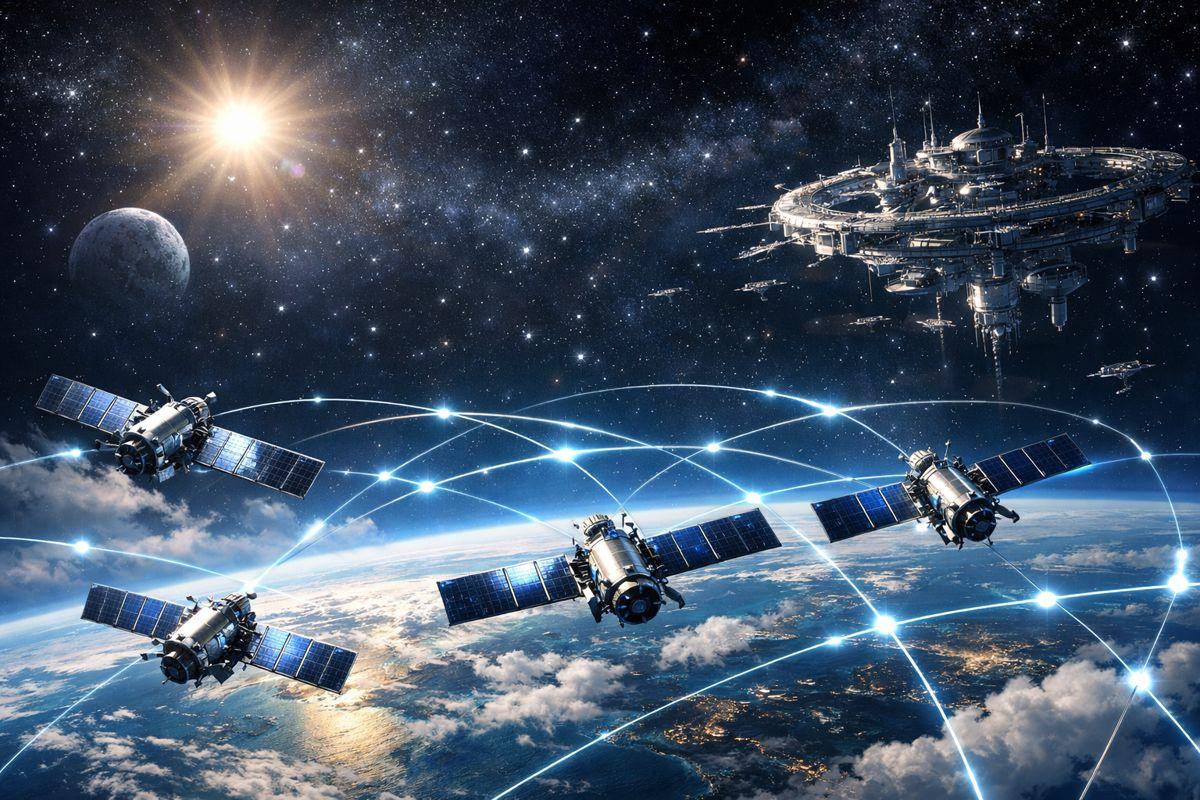

The year 2026 marks a pivotal shift in the space sector, moving from speculative exploration to the establishment of robust, AI-driven orbital infrastructure. As commercial investment accelerates, space technology is becoming the backbone of global connectivity, defense, and industrial innovation.
Artificial Intelligence as the Nervous System of Space
By 2026, artificial intelligence will no longer be an auxiliary tool but the central nervous system for space operations. AI is being integrated into low-Earth orbit (LEO) networks to automate satellite constellation management, optimize bandwidth, and perform real-time collision avoidance. This transition reduces the reliance on ground-based human intervention, allowing satellites to act autonomously as environmental conditions change, ensuring higher reliability and faster data transmission.
Edge Computing: Data Centers in Orbit
The concept of 'space-based data centers' is transitioning from theory to reality. In 2026, orbital edge computing allows for raw data to be processed directly on satellites before being transmitted to Earth. This capability drastically reduces latency and bandwidth costs, making high-speed, actionable intelligence available for applications like precision agriculture, climate monitoring, and disaster response. By processing data in situ, satellite networks are becoming more efficient and responsive than ever before.
The NewSpace Economic Era
The 'NewSpace' movement continues to dominate the landscape, with private entities taking the lead in infrastructure development. As launch costs plummet due to advancements in reusable rocket technology, the barrier to entry for private sector companies has significantly lowered. 2026 is seeing an influx of commercial ventures focusing on in-orbit manufacturing, space-based research, and logistics, effectively turning orbit into a viable marketplace for Earth-bound industries.
Integrated Connectivity and 6G Preparation
Satellite networks are becoming intrinsically linked with terrestrial telecommunications. In 2026, we are witnessing a deeper integration of satellite connectivity into global 5G networks, with foundational work being laid for future 6G standards. This fusion ensures seamless global coverage, bridging the digital divide for remote areas and providing resilient communication channels that are critical for modern logistics, autonomous transportation, and emergency services.
Sovereignty and Defense in Orbit
As space becomes increasingly crowded and economically vital, it has also become a focal point for national security. By 2026, major global powers are prioritizing space as a hub for intelligence and defense. Proliferated satellite architectures—using hundreds of smaller, lower-cost satellites—are being deployed to ensure resilient navigation and communication capabilities that are harder to disrupt or target, reflecting a new geopolitical reality in the final frontier.
As we approach 2026, the space industry is shifting from purely scientific exploration to becoming a critical infrastructure layer for life on Earth. Through the integration of AI, data processing, and commercial expansion, space technology is no longer just about reaching the stars—it is about optimizing the future of our planet. The coming year promises to redefine the boundaries of what is possible in orbit and beyond.